24/7 Emergency Service Open 7 days · 7am–8pm Serving Petaluma, CA & nearby
(707) 610-8836
Petaluma, CA

What Your Garage Door Is Trying to Tell You

Petaluma's 1938-1988 housing stock means aging torsion hardware that grinds, squeals, or bangs. Here's what each sound actually means.

What Your Garage Door Is Trying to Tell You

What You Pay

We can't give you a number without hearing the door first, and that's not us being coy about it - a door running on its original 1960s hardware needs different parts than one that's had a partial replacement in the last decade. Petaluma's housing stock runs from 1938 through 1988, with most of it landing around 1966, so what's actually inside your garage varies a lot more block to block than you'd expect.

A worn roller or a loose hinge bolt is a small job. A torsion spring that's fatigued after decades of cycles, or a shaft that's pitted from age, costs more, because the parts aren't something we carry pre-cut for every era of hardware still in service around here. We'll tell you which one you've got before we quote anything. And if the honest answer is that a repair isn't worth it next to the age of the rest of the system, we'll say that too - patching one worn part on a door that's otherwise near the end of its life isn't a favor to you.

What to Check

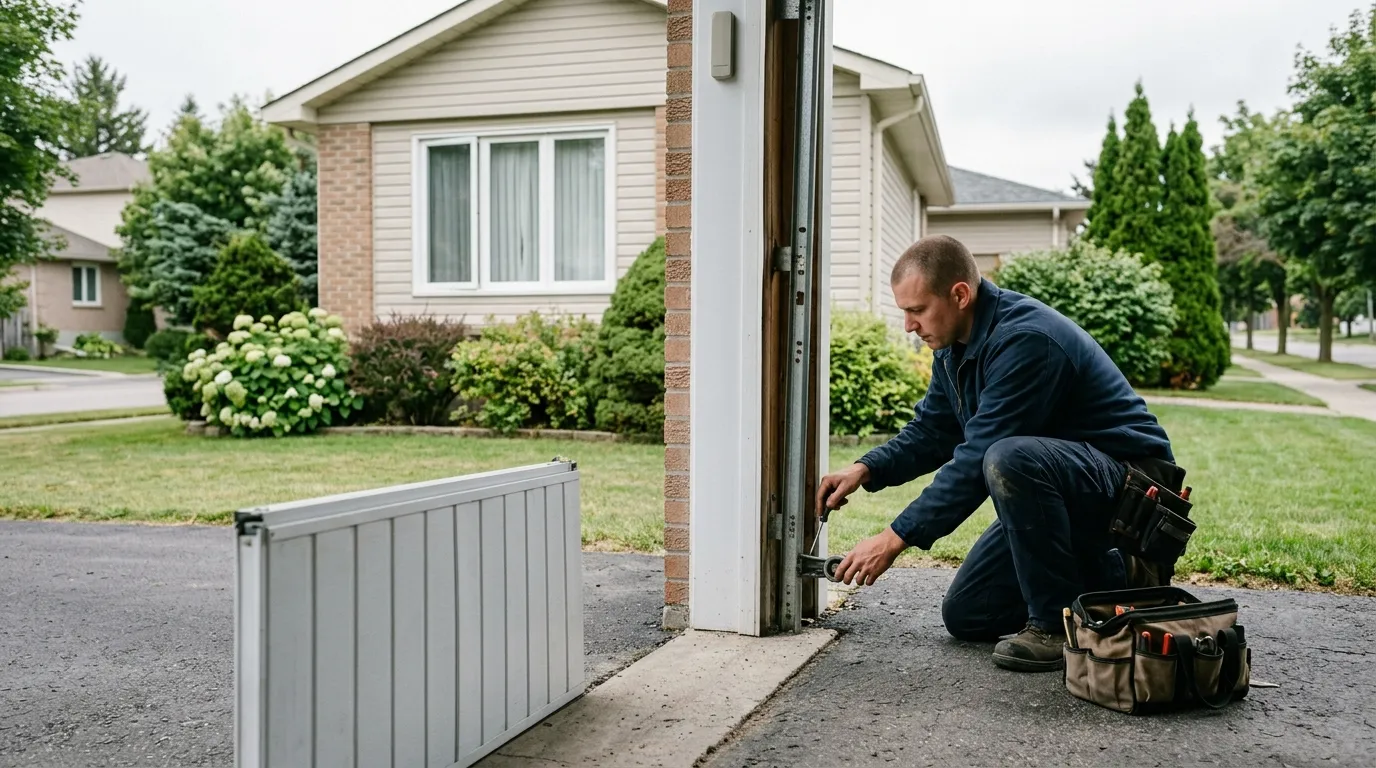
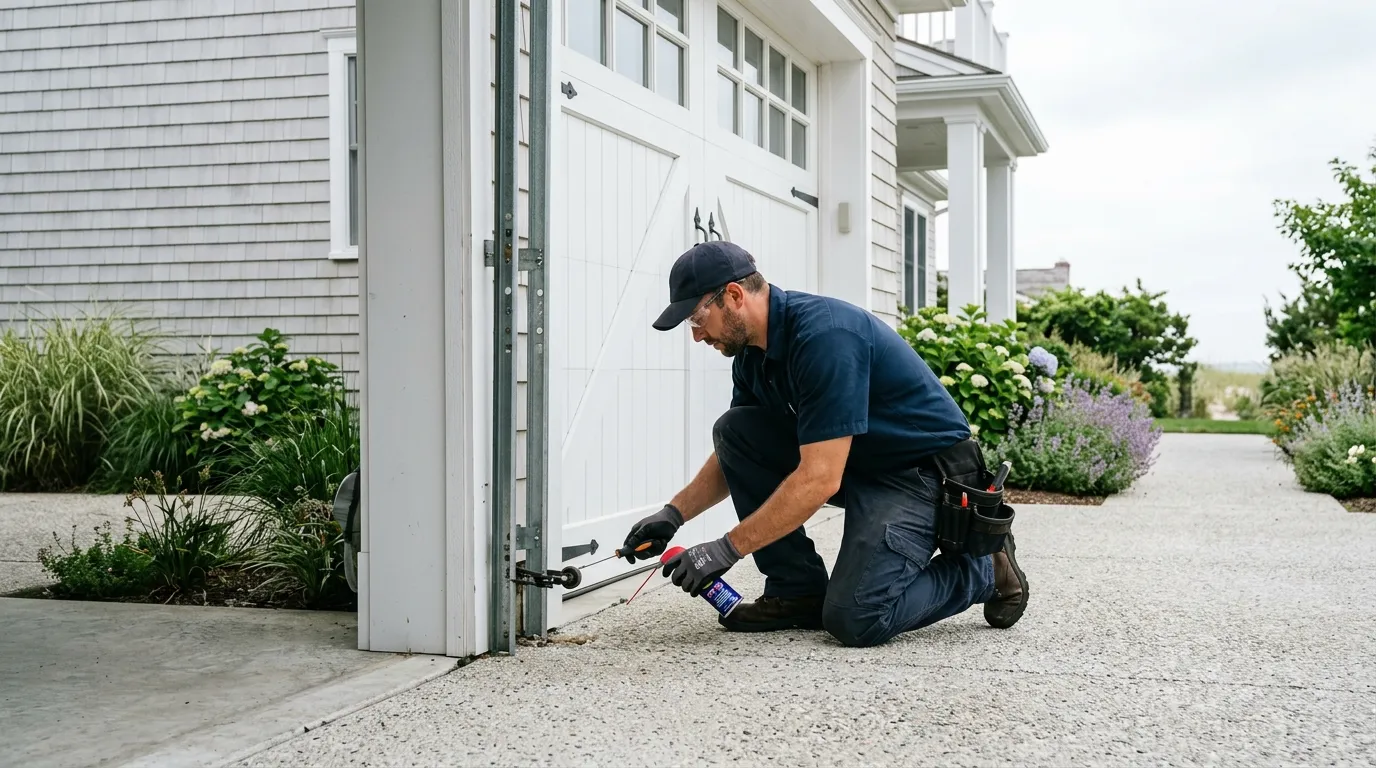
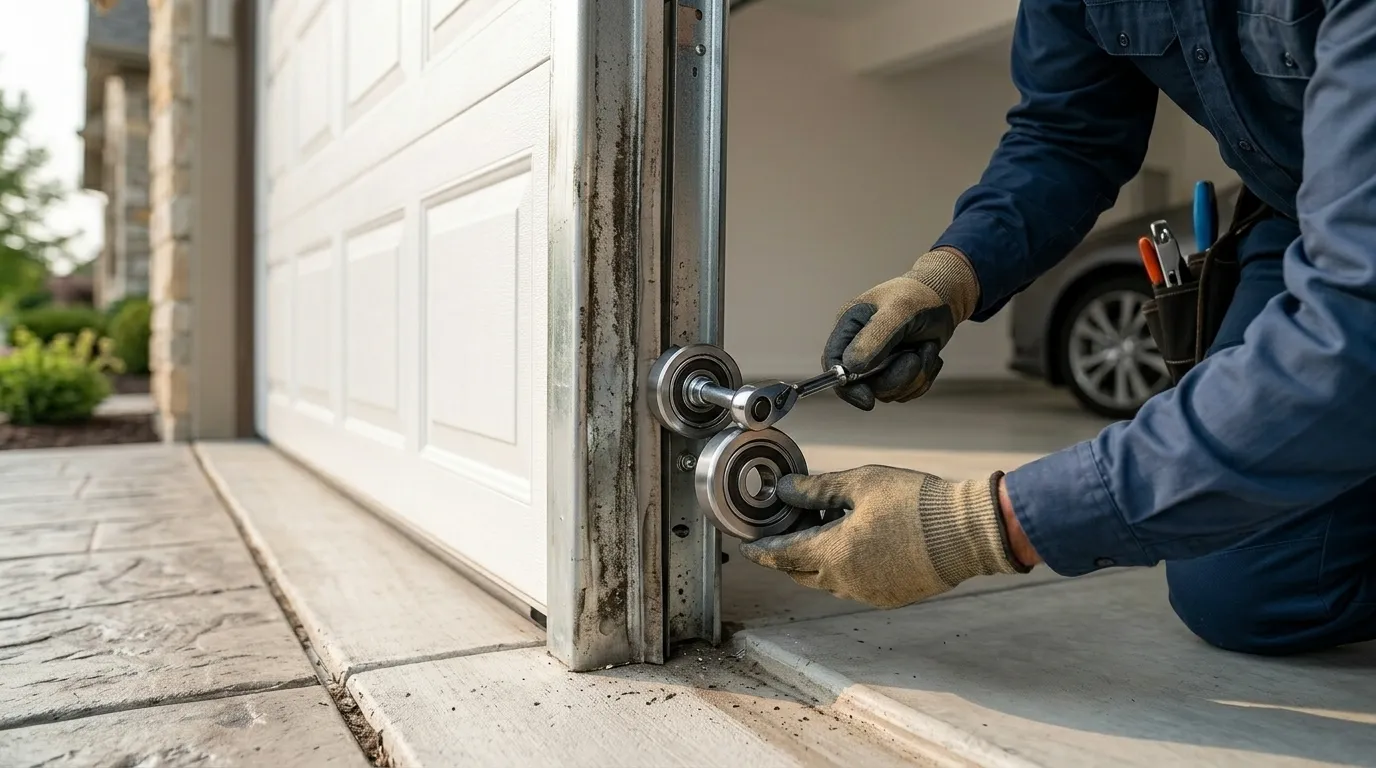
Before you call anyone, listen for where the sound happens in the door's travel. A grinding or scraping noise as the door moves usually means a roller that's worn flat or a track that's collected grit - common on doors that have run for years without being touched, which describes a lot of hardware in homes built in the 1960s and 70s here. A sharp bang partway through the cycle is often a cable slipping off a drum, or a hinge that's finally given out after decades of flexing.

A rhythmic squeal that gets worse near the top of the cycle usually points at the torsion spring itself, not the opener. Springs wear out on a cycle count, not a calendar, so a door original to a house built around 1966 has had a lot more openings on that spring than one on newer hardware. Rattling that seems to come from the wall rather than the door is loose track bolts, and it's the easiest of these to check yourself - put a hand on the track while someone runs the door and feel where the vibration is worst.

How Local Conditions Play In

Petaluma sits in a mild temperate band, which works in your favor compared to places with hard winter freezes - you're not getting the overnight swings that snap a spring already close to failing. That means most of the noises we hear about here aren't weather events. They're wear, plain and simple, showing up on a schedule set by cycle count and lubrication, not by a cold front.

What the mild climate doesn't save you from is the sheer age of the housing stock. With a median build year around 1966, and most homes going up between 1938 and 1988, a huge share of the doors we look at have had thirty, forty, even fifty years of openings and closings on the same hardware. Steel fatigues and grease dries out on that timeline no matter how gentle the weather's been. So if your door starts making noise, don't chalk it up to a cold morning - in this climate that's rarely the cause. It's more likely the hardware finally telling you how old it is.

The Situation

This service area covers a wide spread of small communities - Penngrove five miles out, then Cotati and Rohnert Park a bit further, on out toward Sebastopol, Kenwood, and the string of towns along the way to Point Reyes Station. Across that footprint there are roughly 53,399 households, and about 24,784 of them own the house they're living in, which usually means they're the ones deciding whether a noisy door gets fixed or lived with.

With a median household income of $125,548 across the area, most owners here aren't stretching to cover a repair, but that doesn't mean every noise needs a truck roll. A lot of the calls we take turn out to be a fifteen-minute fix once we're looking at the actual hardware instead of guessing over the phone. Where the housing stock runs old - and a lot of it does, given the 1938 to 1988 build range - the harder calls are the ones where the spring, the shaft, and the rollers are all near the end of life at the same time, and patching just one of them means the next one goes in a few months.
How it works

From “it’s stuck” to “it’s fixed”

A quick, honest process - no guesswork and no surprises, start to finish.

  1. 1
    Tell us what’s wrong - Petaluma garage door service

    Tell us what’s wrong

    Describe the symptom - won’t open, loud bang, opener runs but the door won’t move.

  2. 2
    On-site diagnosis - Petaluma garage door service

    On-site diagnosis

    A technician tests the door under power and by hand and finds what actually failed.

  3. 3
    Clear, up-front plan - Petaluma garage door service

    Clear, up-front plan

    You get the fix that’s needed and what drives the cost - before any work starts.

  4. 4
    Repaired & tested - Petaluma garage door service

    Repaired & tested

    The repair is done, the door is set true and tested, and the work area left clean.

Next step

Serving Petaluma, CA - tell us what your door’s doing and we’ll take it from there.

How we work

What to expect

Diagnosis firstEvery visit starts by finding what actually failed - not a pre-written parts list.
The right part for the doorSprings and openers matched to the door’s weight and age, so the fix holds up.
Straight answersWhen a repair makes more sense than a replacement - or the reverse - you hear it plainly.
Clean, careful workTension released safely, hardware set true, the door tested under power before we leave.
Questions

Frequently asked

Straight answers about garage door repair in Petaluma. Still unsure? Ask us directly.

Why does my garage door squeal only in the morning?

It's less about temperature here than about the door sitting still overnight while old grease settles off the moving parts. On original hardware from a home built in the 1960s or 70s, that dried-out lubrication is the usual culprit, not the mild morning air.

Is a grinding noise always the rollers?

Usually, but not always. On older doors it's often a worn roller riding in a track that's collected grit over decades of use. Sometimes it's the track itself bent slightly out of line. Either way it's worth checking before assuming a full roller replacement is needed.

My house was built in the 60s - does that mean I need a full replacement?

Not automatically. Plenty of doors from that era are still fine with a roller and cable service. The concern is when several parts - spring, shaft, rollers - are all near the end of life at once, which is common given how much of Petaluma's housing stock dates to that period.

Ready to get your garage door sorted?

Tell us what it’s doing and where you are in Petaluma - we’ll take it from there.

Request a QuoteCall