Doing It Yourself
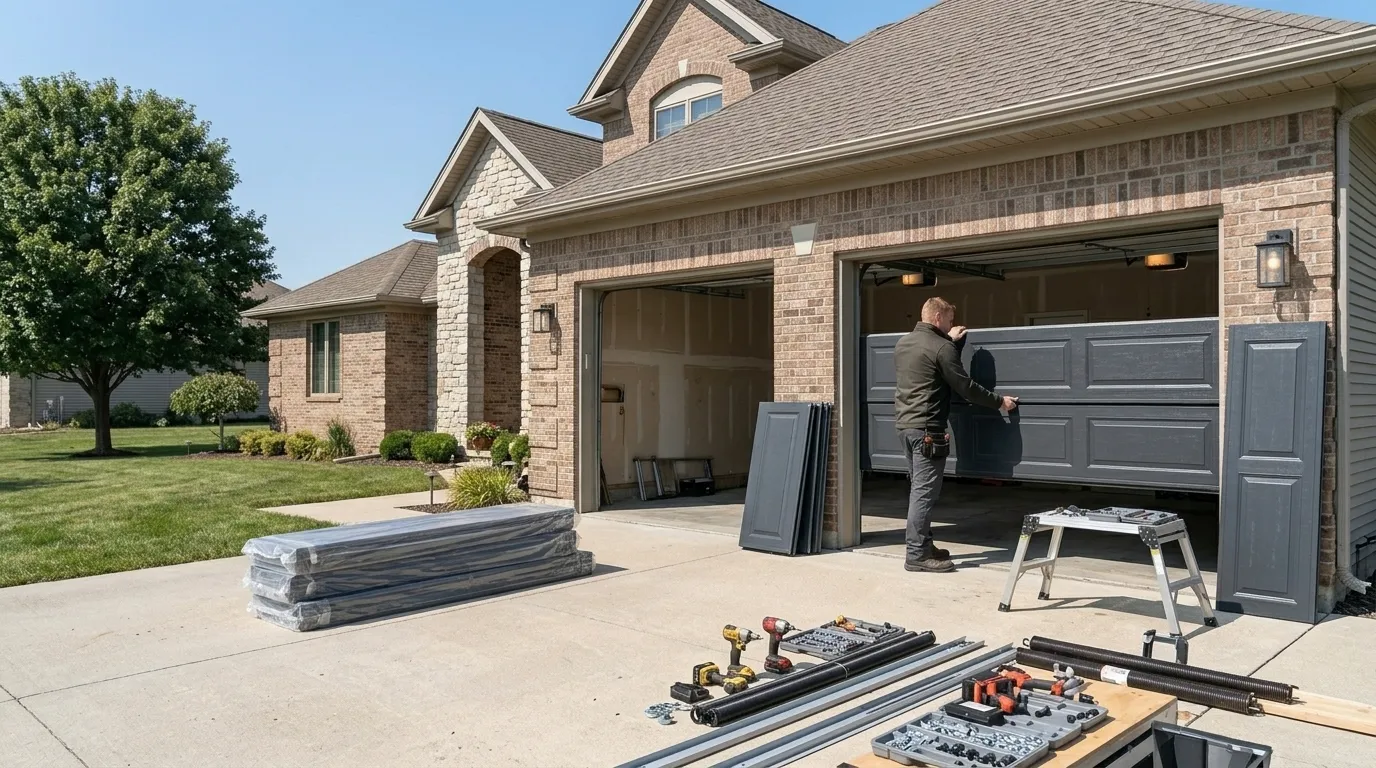
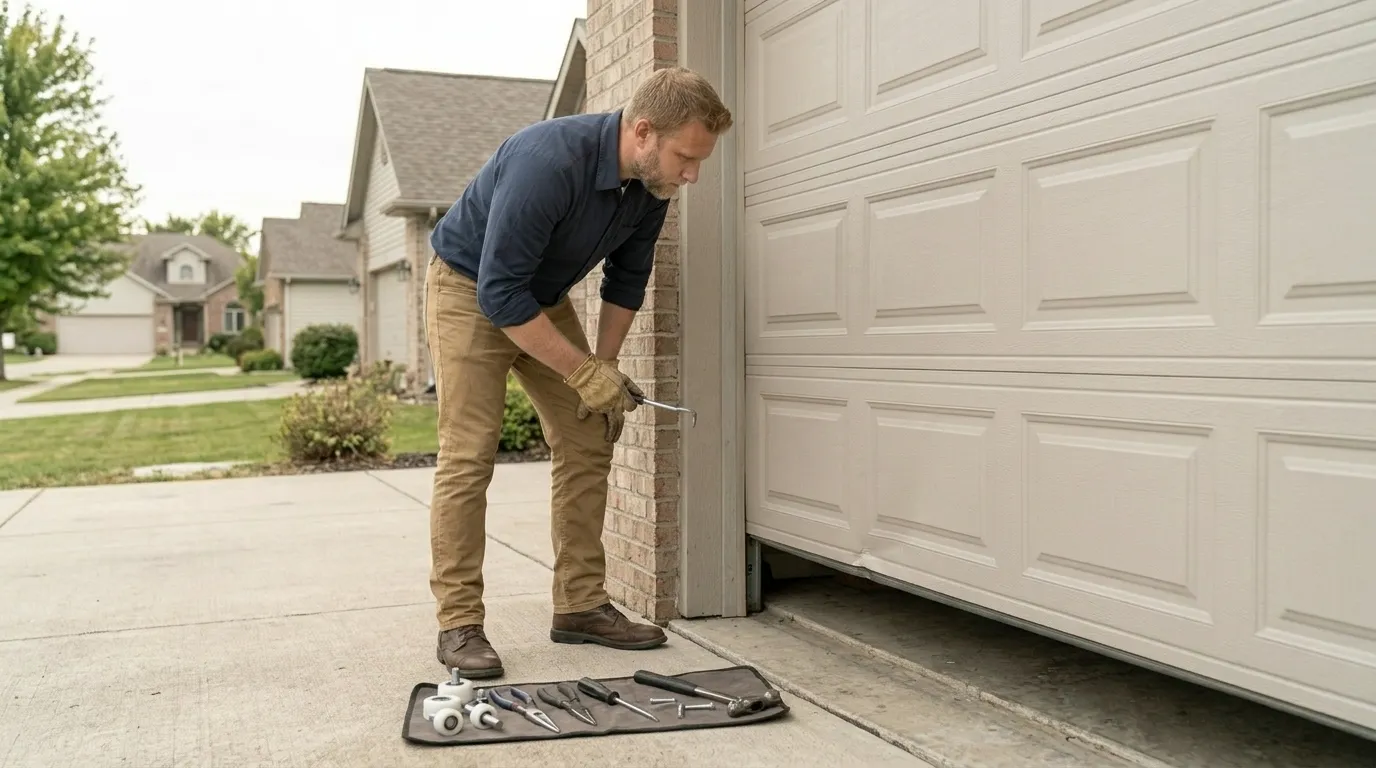
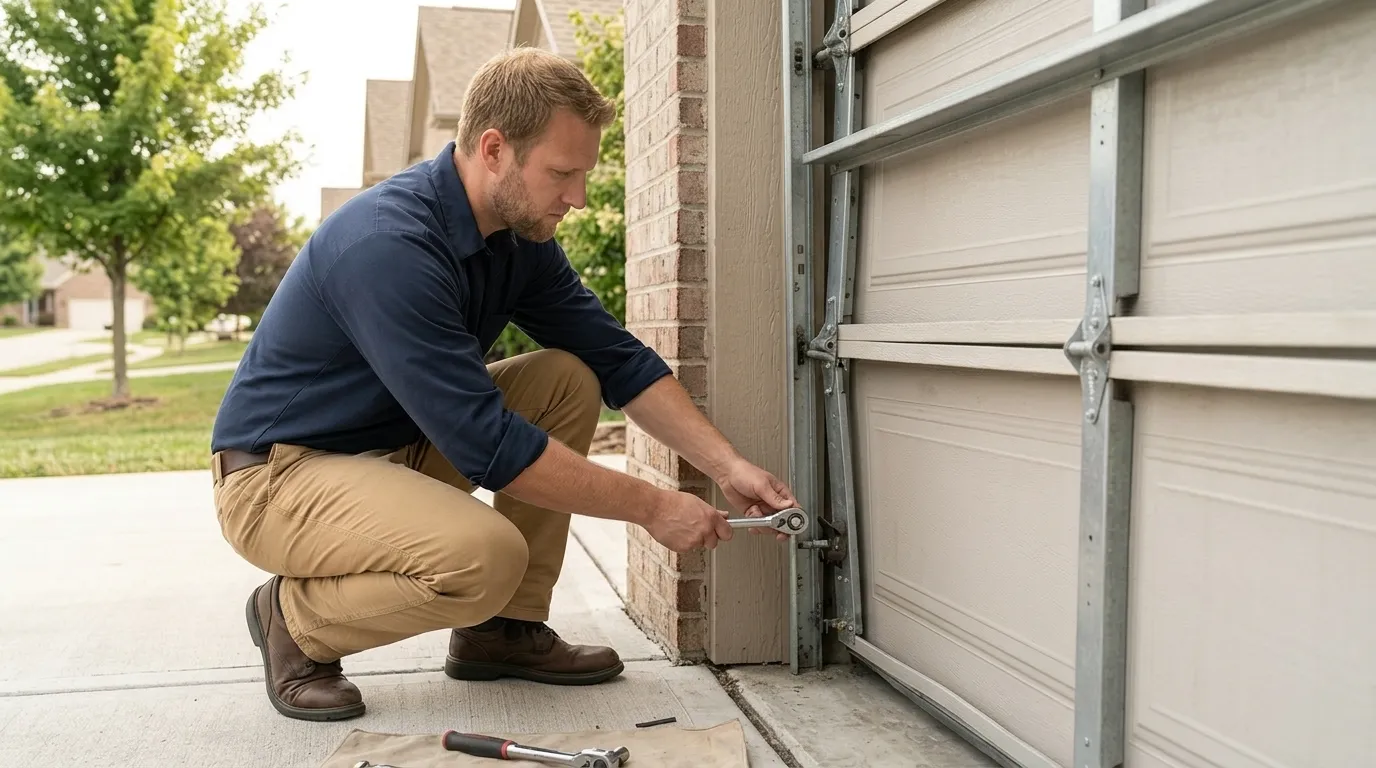
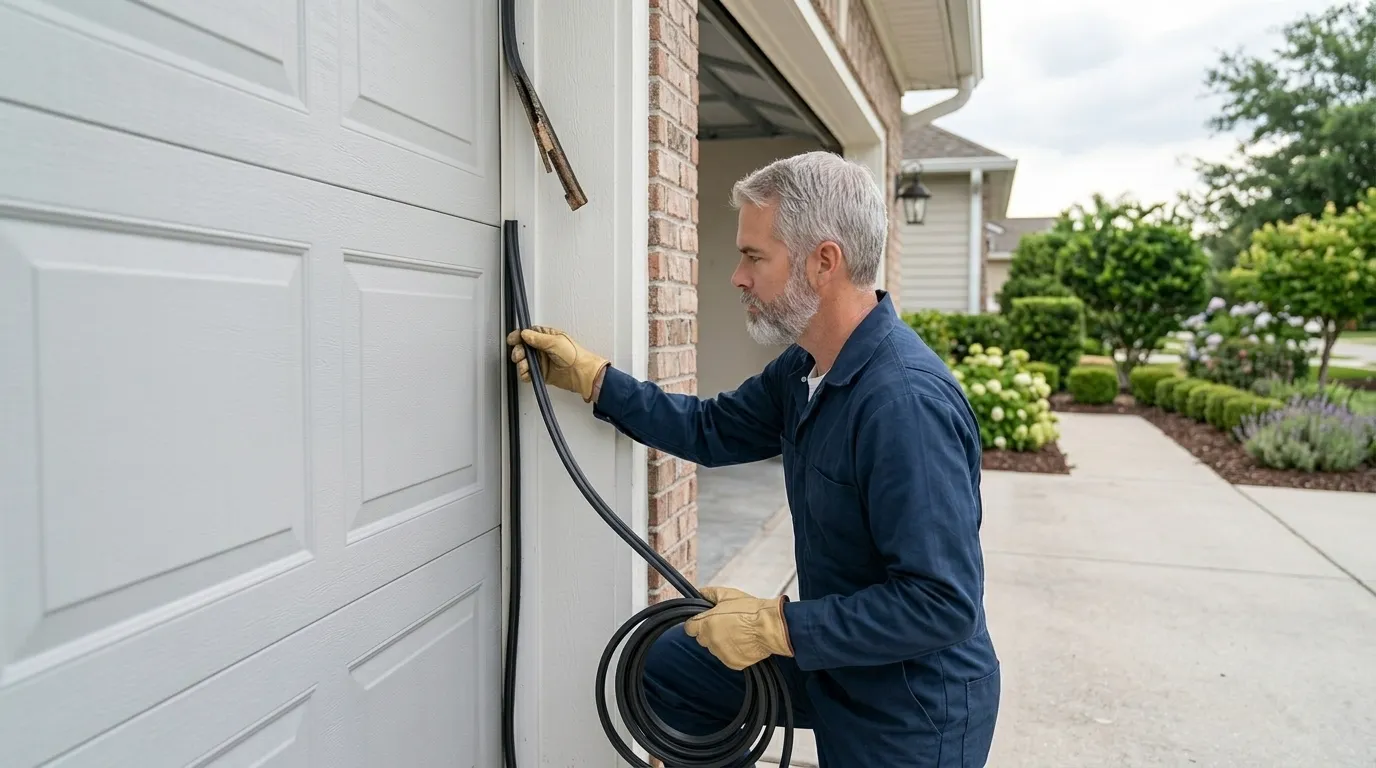
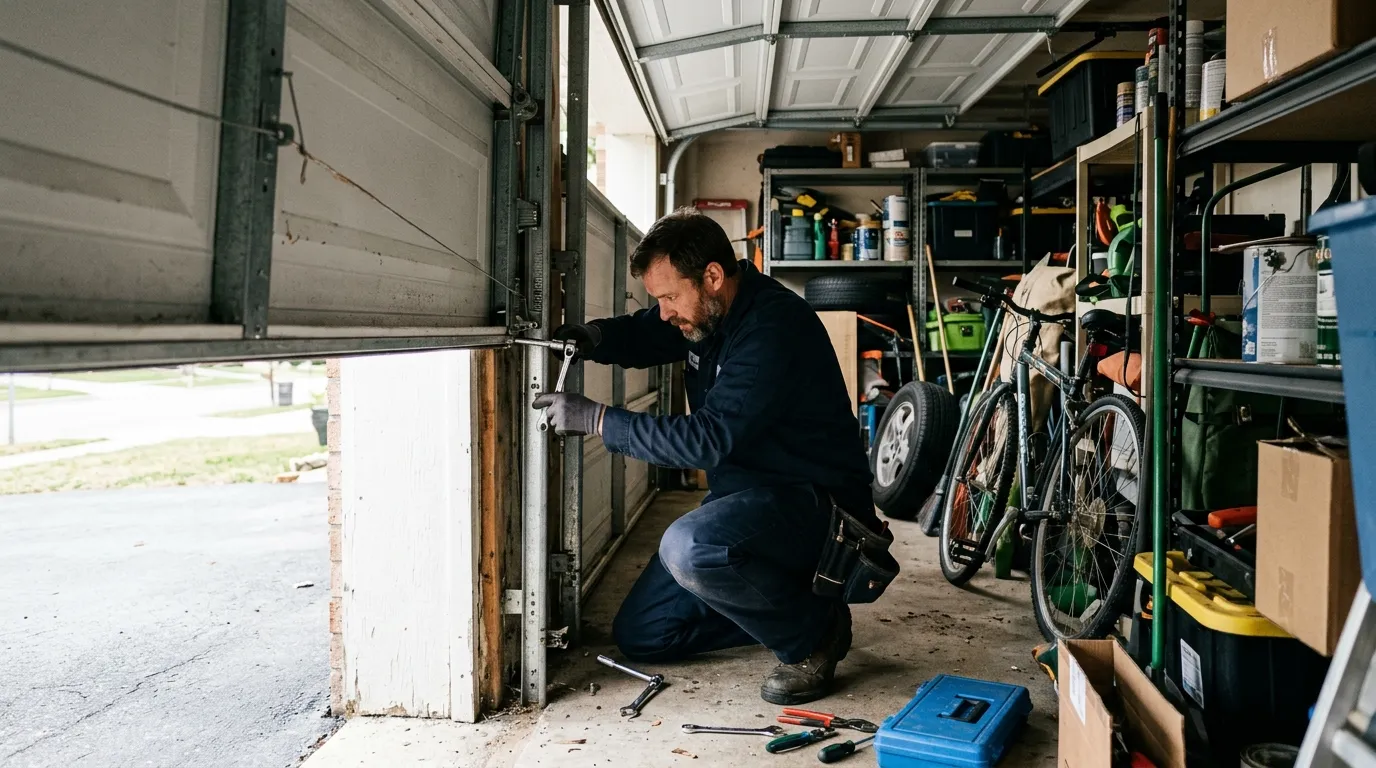
If one panel on a steel sectional door is dented but the door still rolls smooth and the seams aren't bowed, you can sometimes order a matching panel from the door's manufacturer and swap it yourself with a couple of vise grips and a socket set. That works fine on newer doors where the model and panel design are still in production.
It gets harder on the doors we actually see most in this area. A lot of homes here still have the original door, or a direct replacement installed decades ago, on a track and hardware layout that hasn't been sold new in years. Ordering "a panel that fits" isn't simple when the manufacturer changed panel height, screw spacing, or hinge style between production runs. Get the width wrong by even a quarter inch and the new panel binds against the roller track under load, which strains the opener and can crack the panel you just installed.
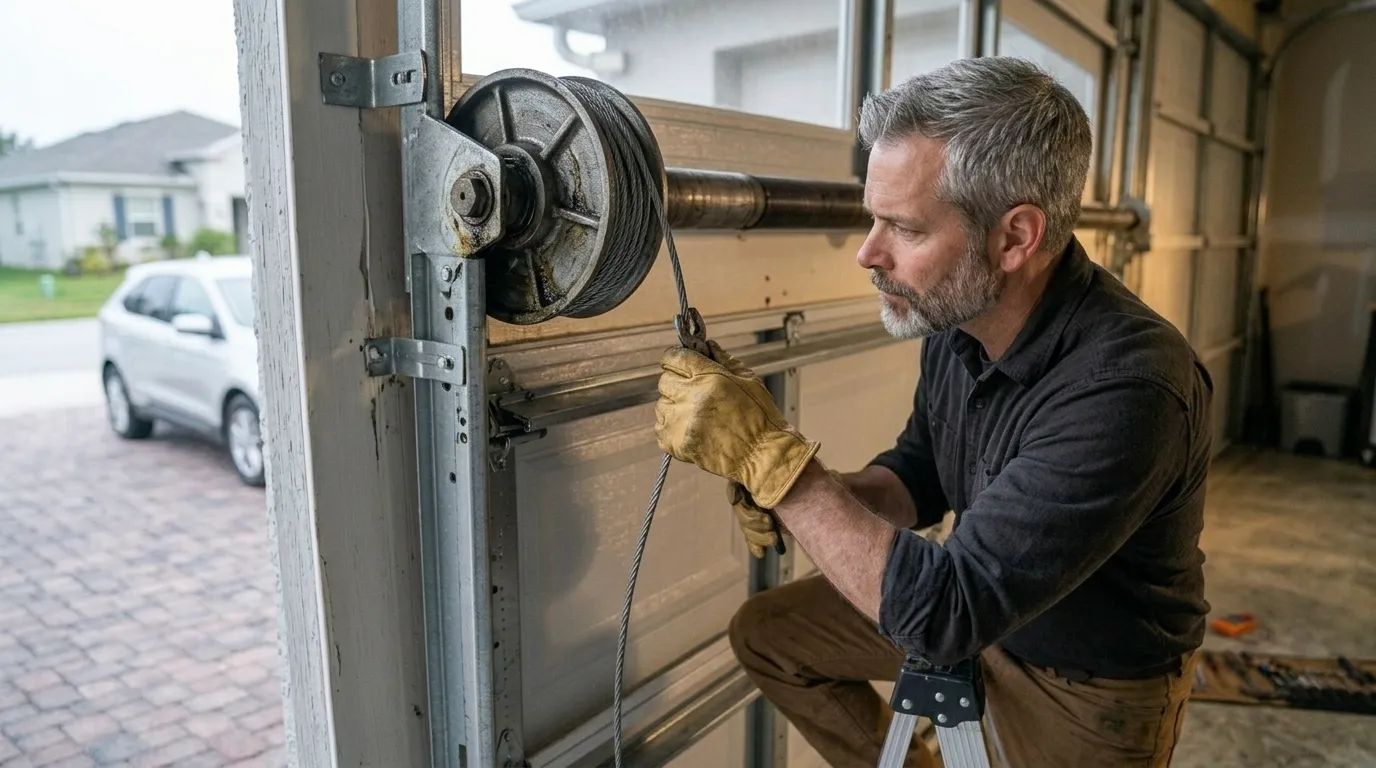
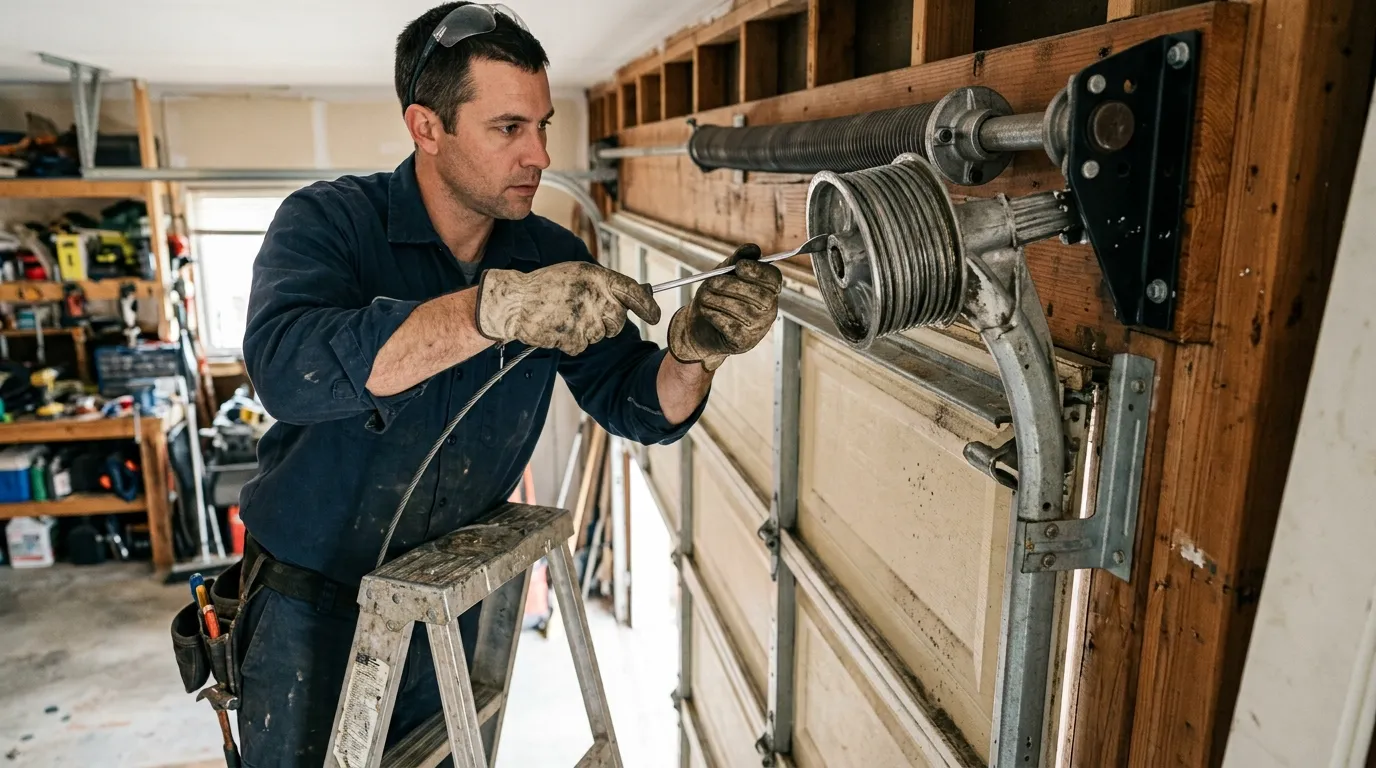
We're not going to tell you this job always needs a truck. If your door is a common size, common brand, and you're comfortable pulling the section without the whole door dropping on you, it's a reasonable weekend project. Where we'd stop you: any panel below the bottom hinge on a door with torsion springs. Those springs hold real tension, and pulling a bottom section without releasing them first is how people get hurt.
Why It Happens Here
Panel damage shows up for the reason you'd expect anywhere - a car bumper, a basketball, a gust catching an open door - but how bad it gets and how hard it is to fix ties directly to how old the housing stock is here. Housing across this area was built mostly between 1938 and 1988, with the bulk of it going up in the 1960s and 70s. That means a large share of the garage doors on these houses are either original equipment or an early replacement, both long out of production.
The mild temperate climate here actually works in your favor on this one - we don't get the freeze-thaw cycles that crack panel seams or the extreme swings that warp wood sections the way houses in harsher climates see. Panels here fail from impact and slow-motion sagging, not weather stress. That's part of why so many of these original doors have lasted this long: nothing forced an early replacement, so the door limped along until a dent finally made the mismatch between old hardware and available new parts impossible to ignore.
How It Shows Up
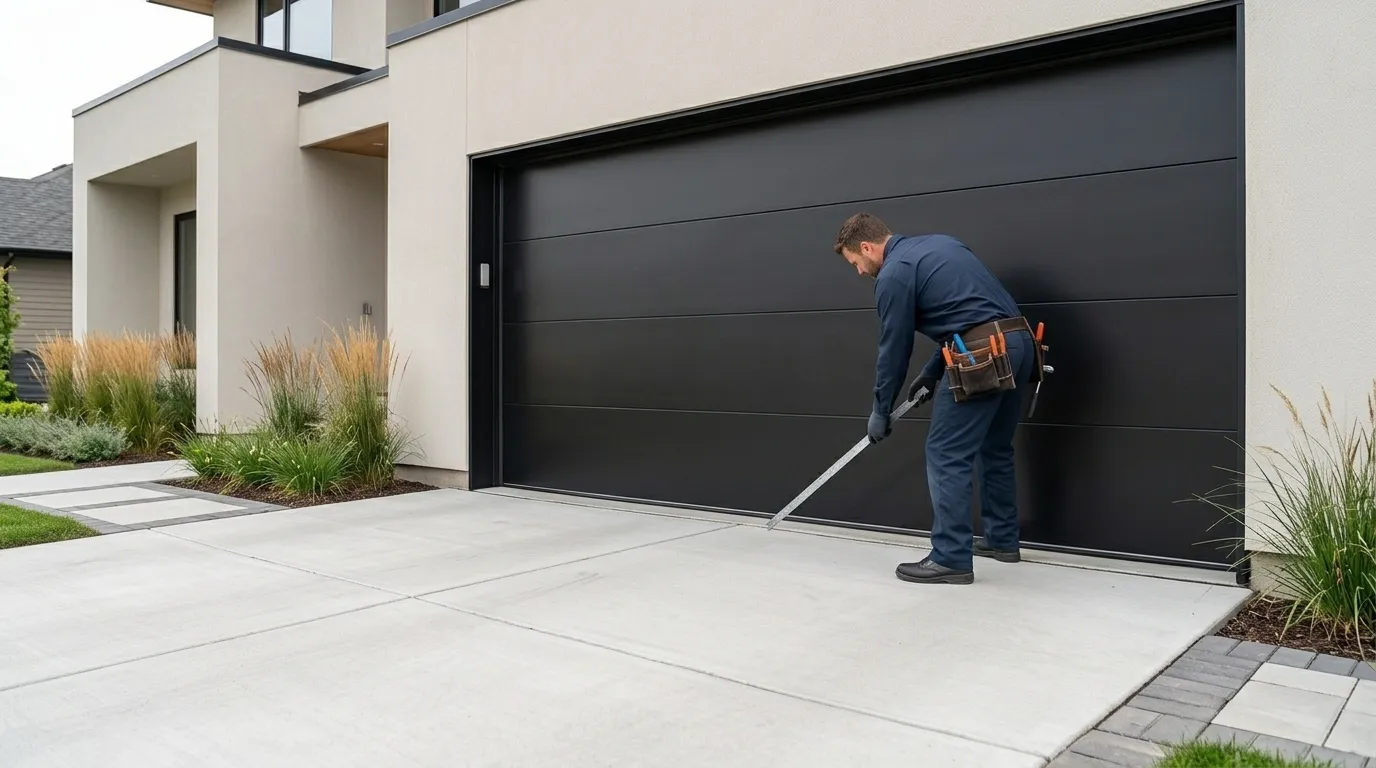
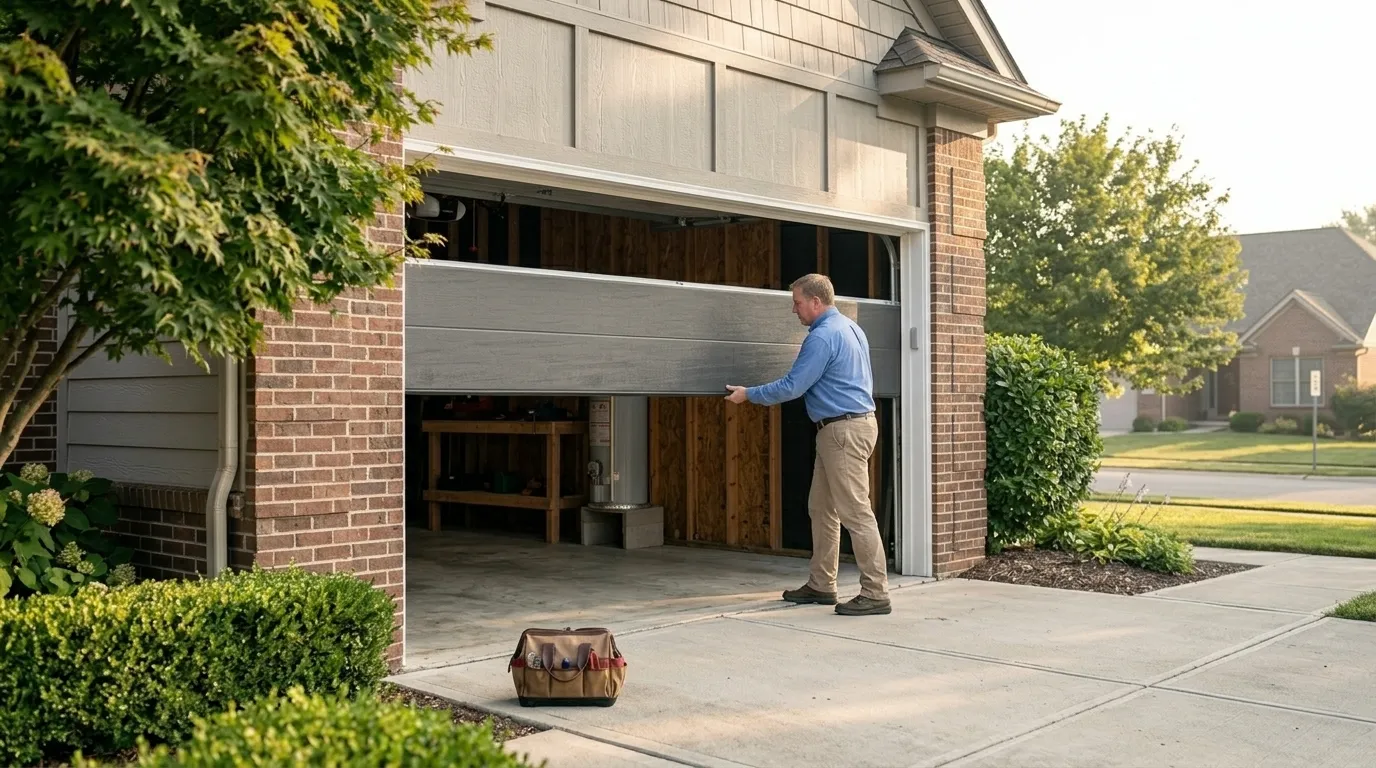
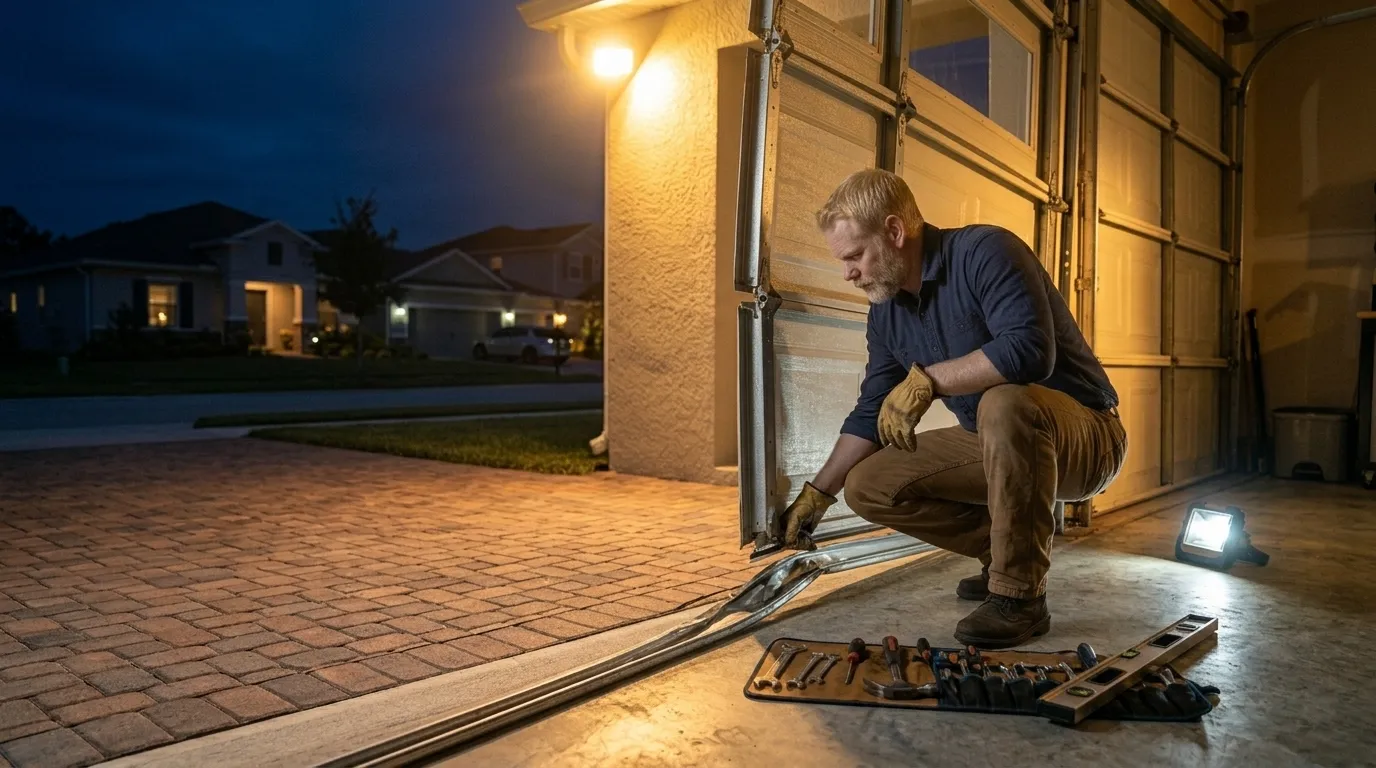
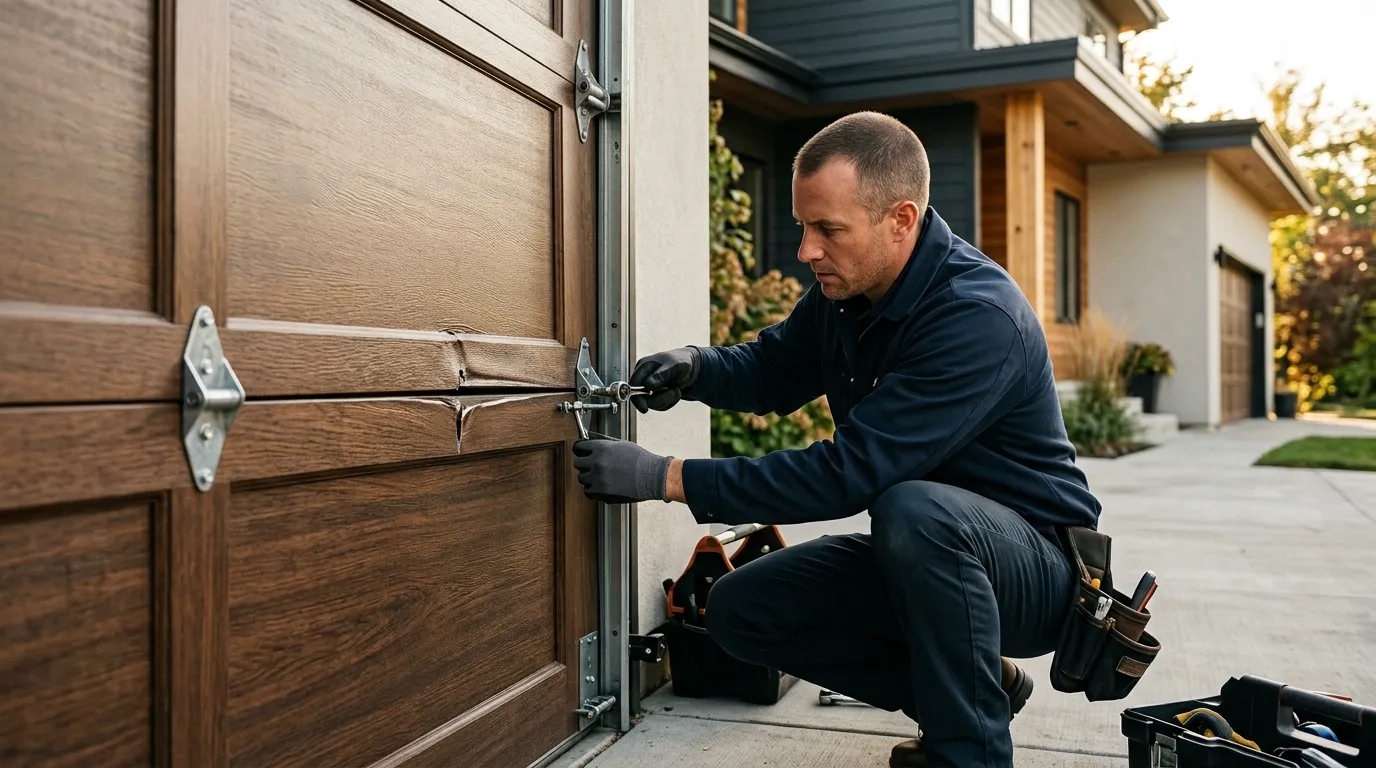
Most calls start the same way: a bottom or second-from-bottom panel is dented, cracked, or punched through, and the door either won't close flush or grinds against the track on the damaged side. On older doors from the 1960s stock, you'll often see the dent has also bowed the panel seam, which throws off the whole section's fit against its neighbors even before you touch it.
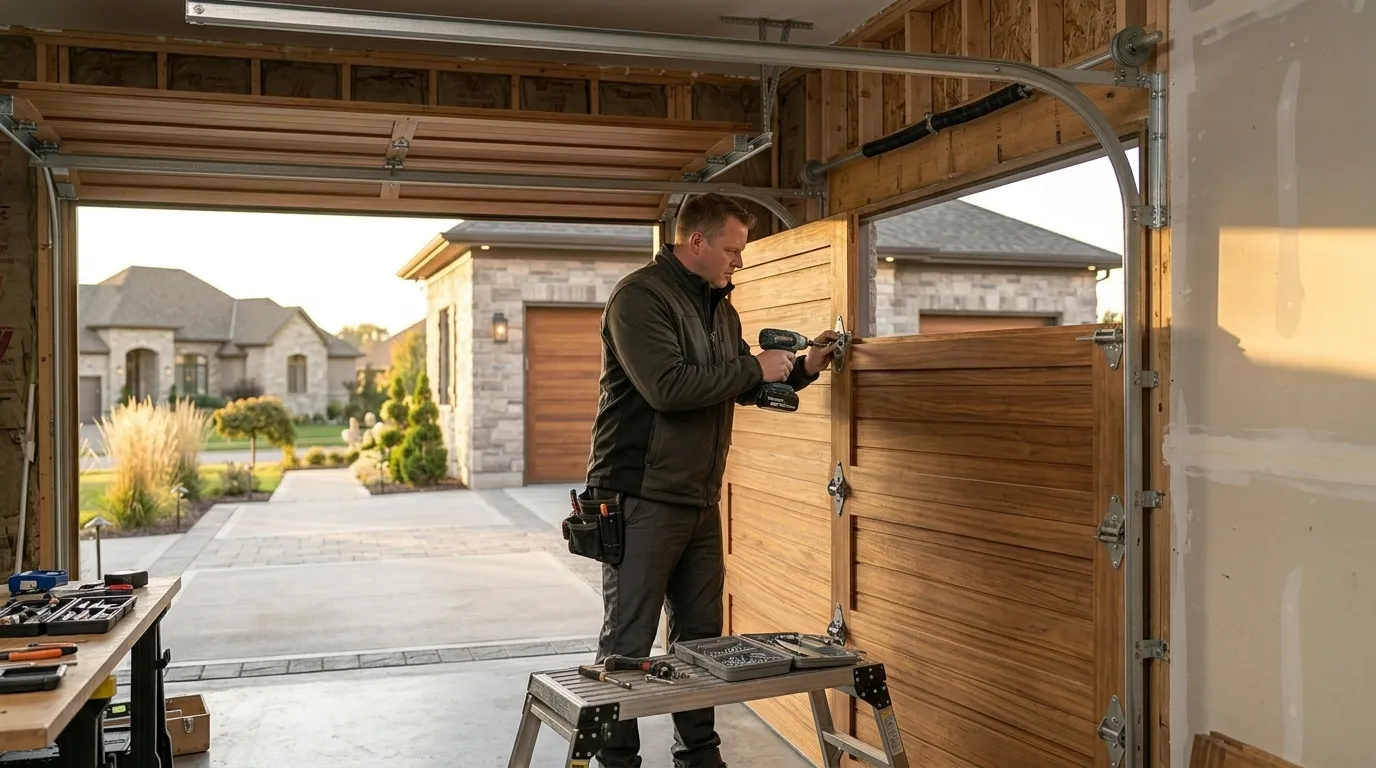
Sometimes it's not impact damage at all - it's a wood panel on an older door that's delaminating or rotting at the bottom edge from years of ground moisture, which is a slower version of the same problem: one section failing while the rest of the door is sound. Either way, the fix is rarely "just the one panel" once the door's old enough that a single new section changes the balance of the whole thing.