Doing It Yourself
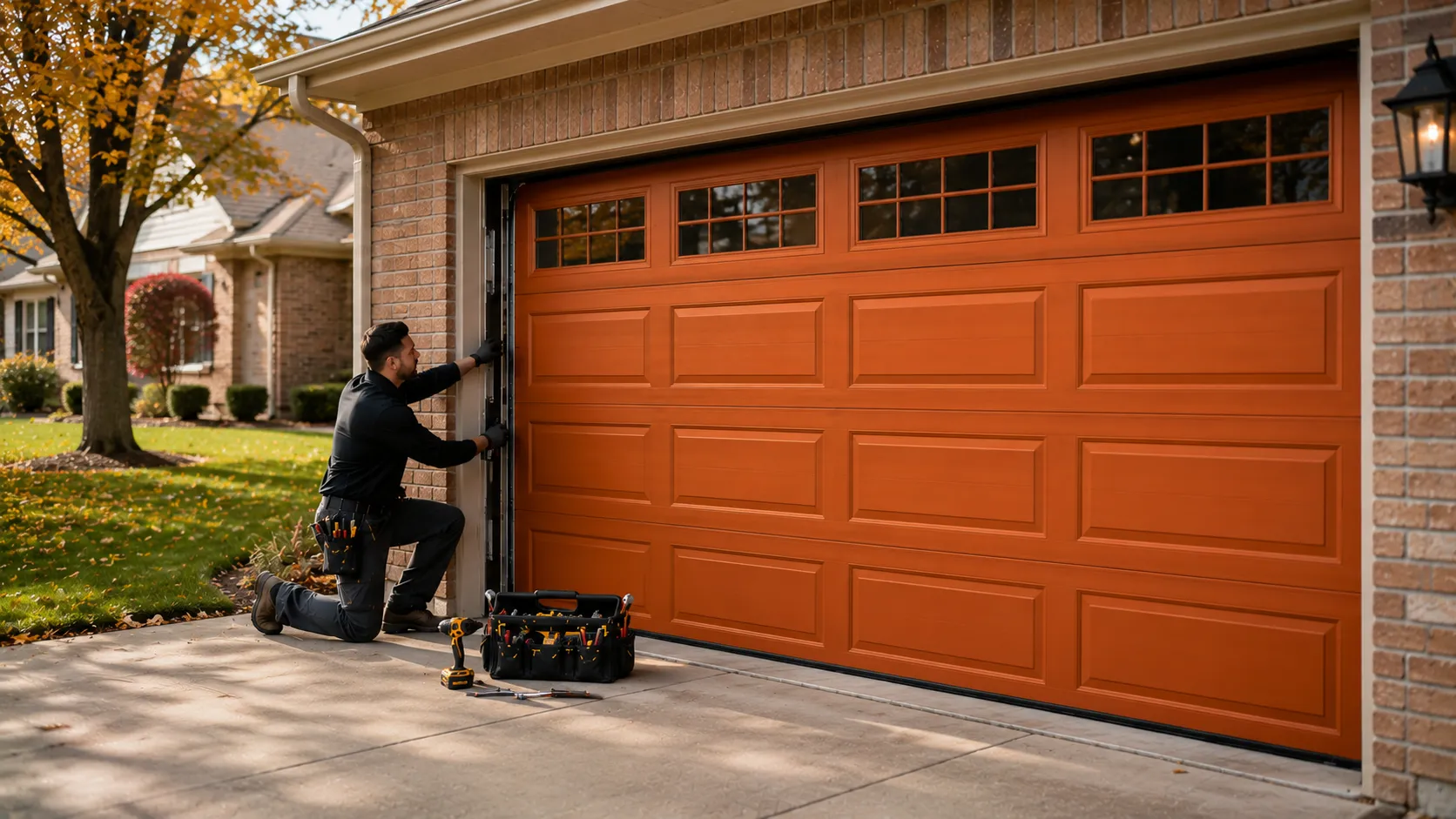
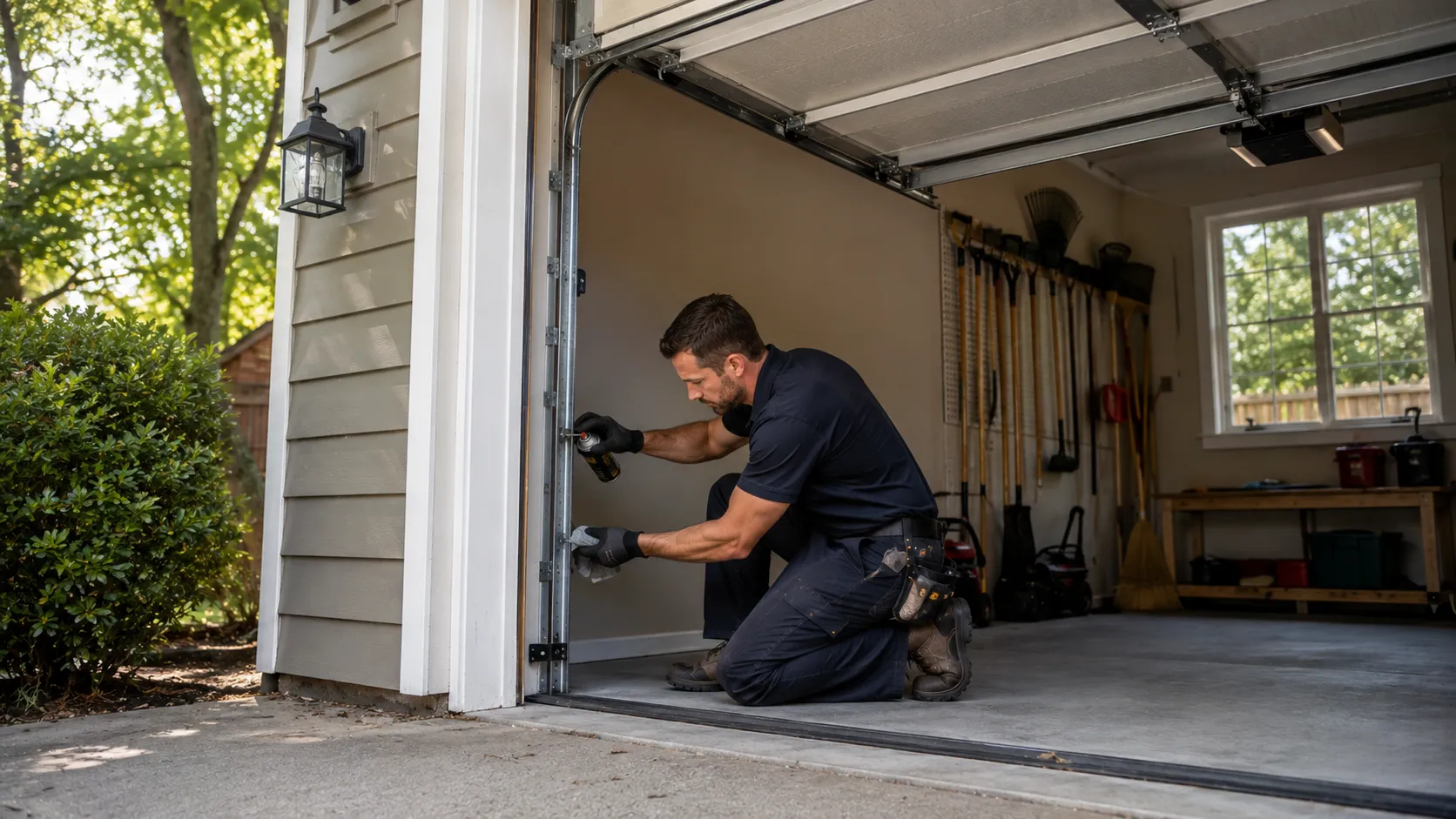
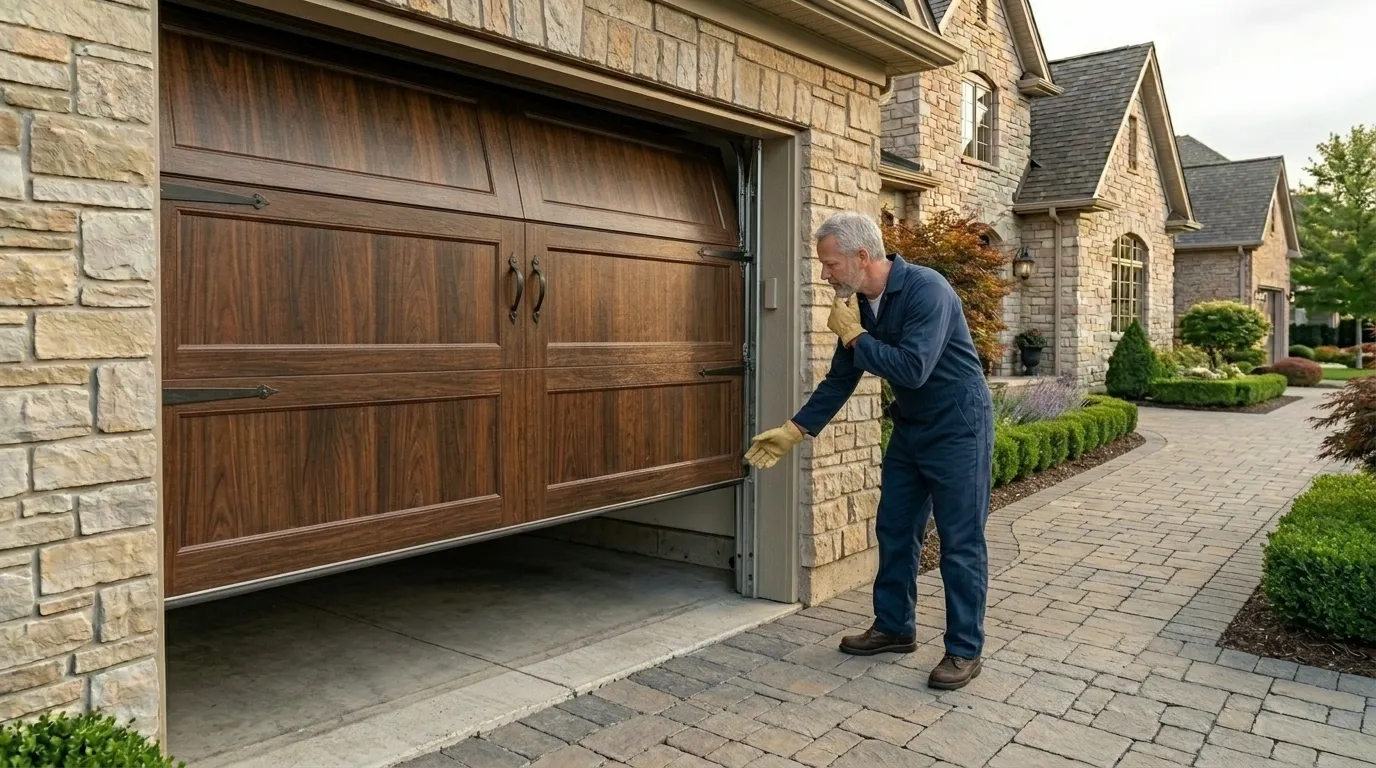
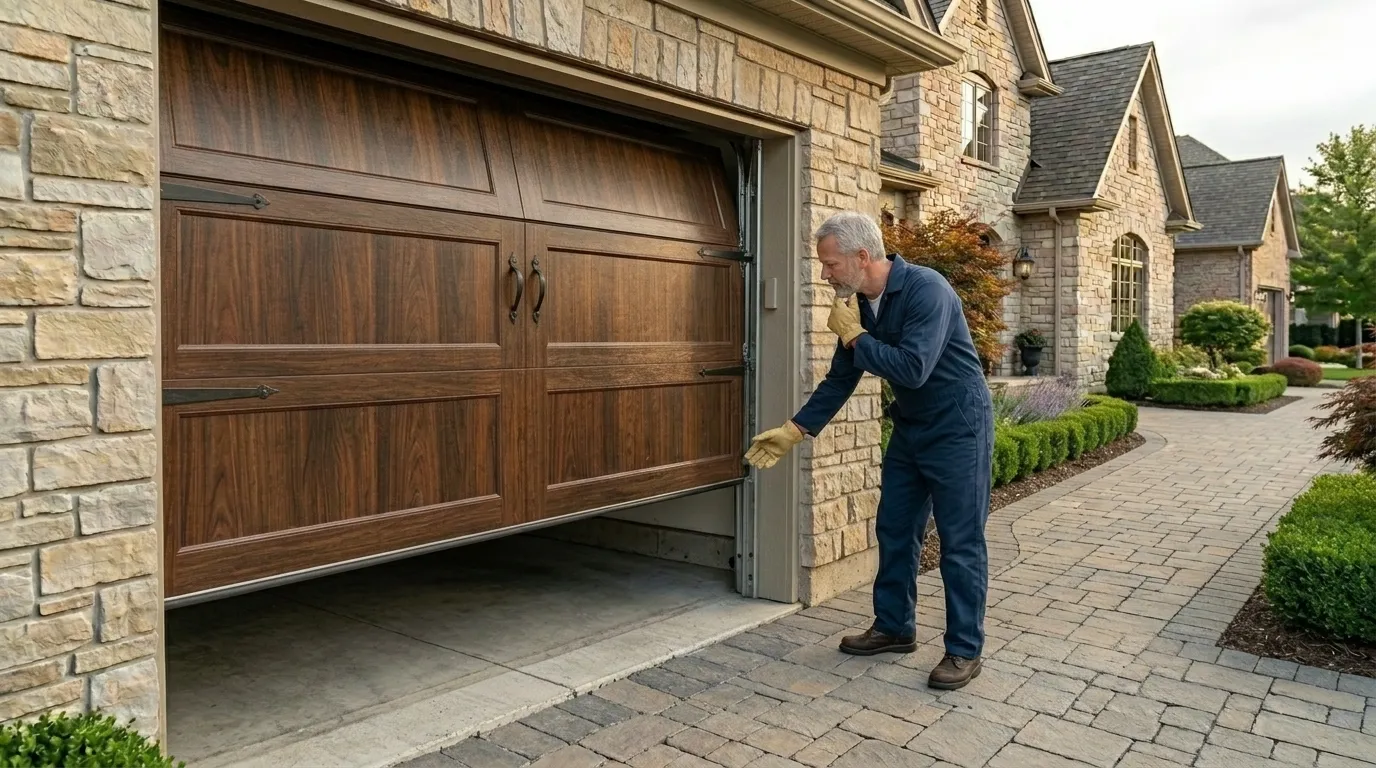
Before you call anyone, there are a few things worth checking yourself. If the door won't close, look at the two small sensors near the floor on each side of the track - a spider web, a stack of leaves, or a kid's bike leaned against one will trip the safety reversal every time, and cleaning the lens fixes it in thirty seconds. If the opener runs but the door doesn't move, check whether the trolley has been pulled to the manual release - the red cord hanging from the rail. If the door is dead silent and the opener light doesn't come on, check the outlet and the breaker before you check anything else.
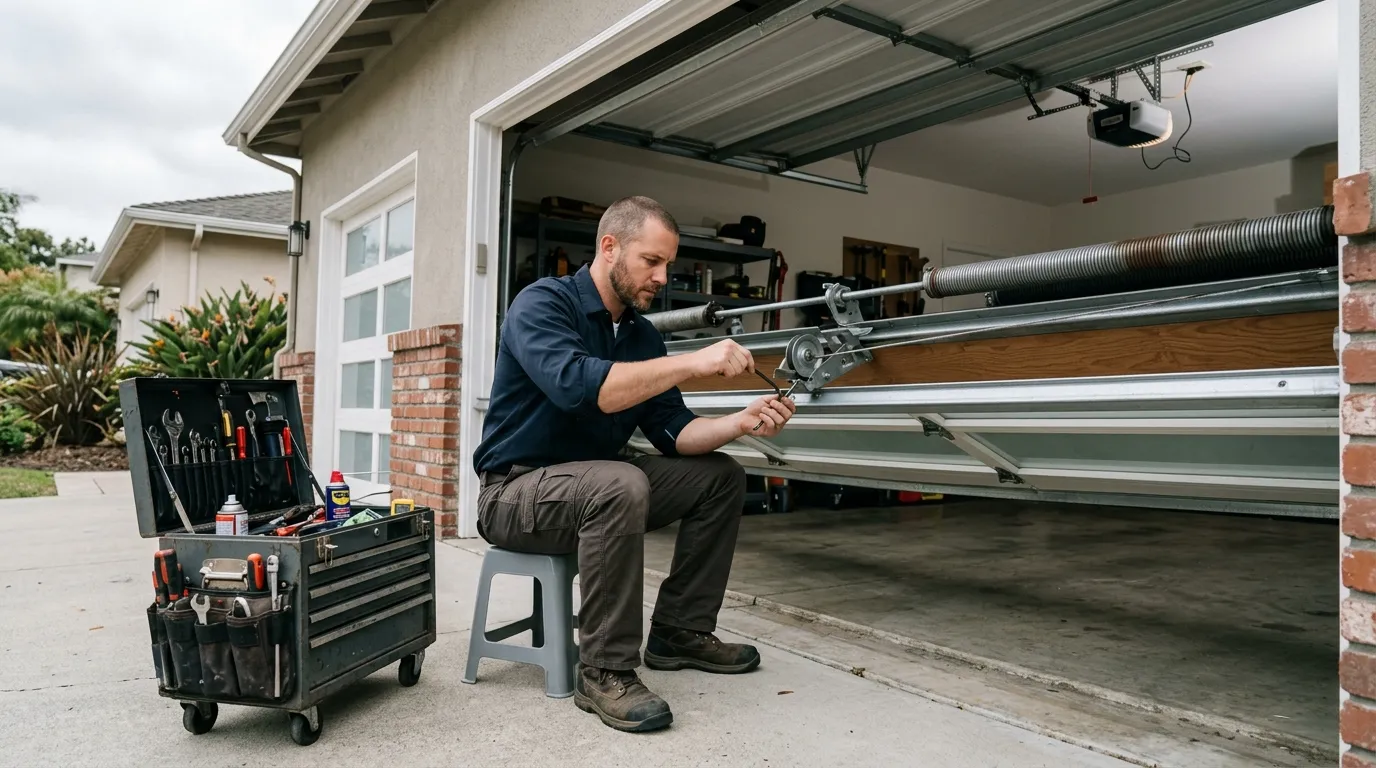
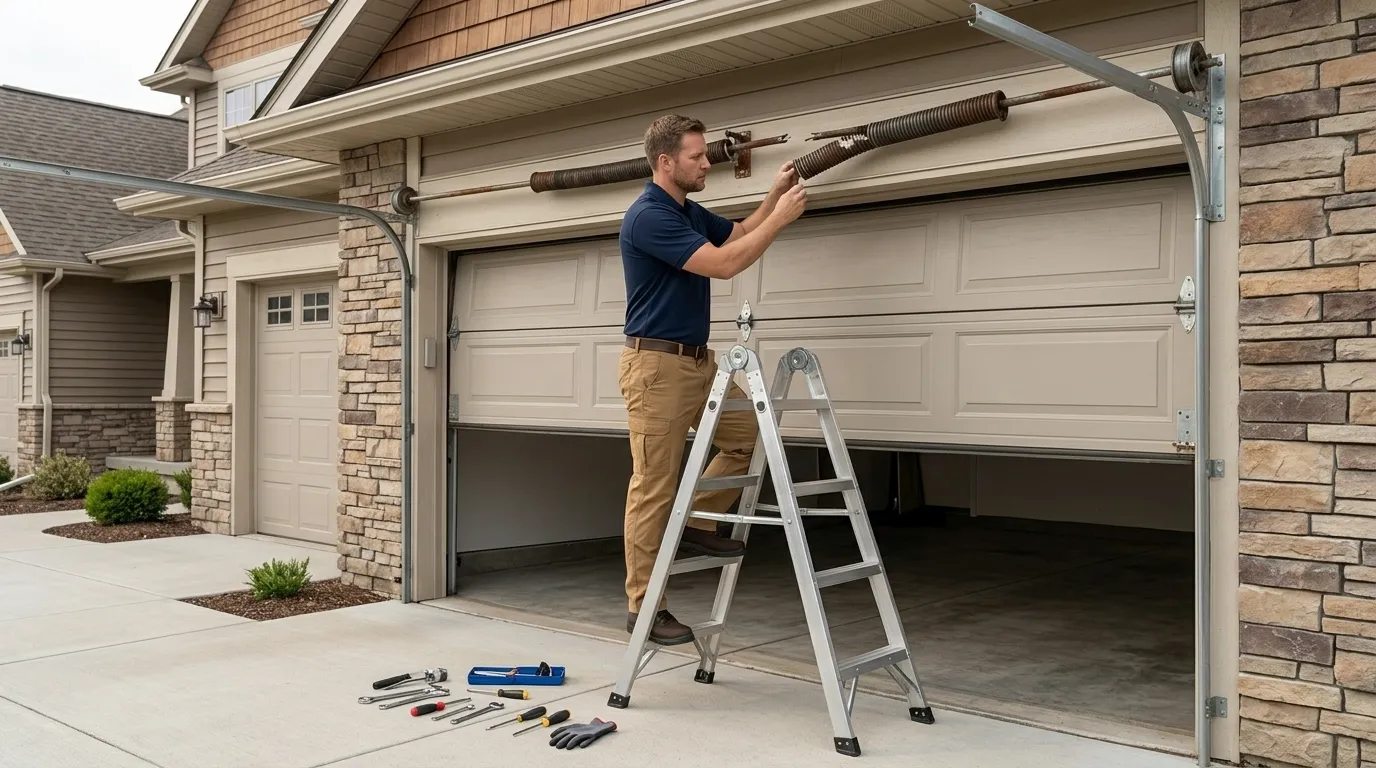
What you should not do: if a spring is visibly broken - a gap in the coil above the door, or a door that won't budge even lifted by hand - stop there. Torsion springs are under enough tension to break bones, and cable drums under load can whip a door off track if you force it. If the door came off its tracks entirely, or a cable has unspooled from the drum, that's a call, not a project. We'd rather talk you out of an unsafe fix over the phone than patch you up after one.
Why It Happens Here
Most of the houses in this service area were built between 1938 and 1988, with the median year sitting at 1966, so a lot of the original torsion springs and single-plate track hardware from that era are simply worn out now, not damaged by any one event. Across the 30 communities this company reaches - from Penngrove five miles out to at twenty - the stock is overwhelmingly 1960s and 70s construction, which means a lot of doors running on hardware nobody has touched since the house was framed.
The mild temperate climate here doesn't crack springs with hard freezes the way colder regions do; instead it's decades of UV and daily temperature swings drying out the same lubrication and rubber seals installed when these houses were built. A spring rated for roughly 10,000 cycles doesn't care what year it is - it just wears out on schedule, and a house built in the 1960s has had a lot more of those cycles than one built in the 1990s. That's the pattern behind most of the emergency calls: not storm damage, just decades of use finally catching up with original parts.
How It Shows Up
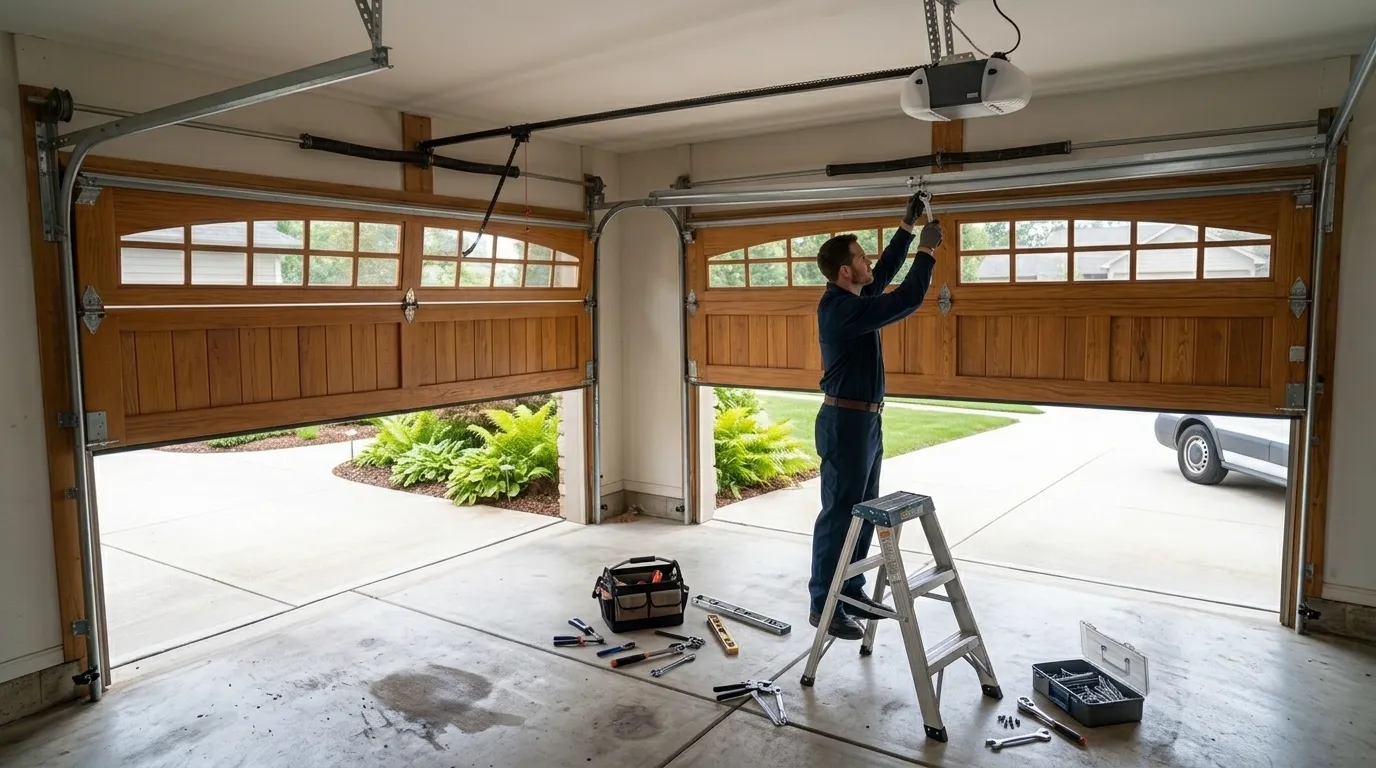
The most common emergency call is a torsion spring that lets go with a loud bang - usually first thing in the morning, since the spring has been sitting under tension all night and finally gives. The door will feel like dead weight, heavy enough that the opener strains and clicks off, or the door won't lift more than a few inches by hand.
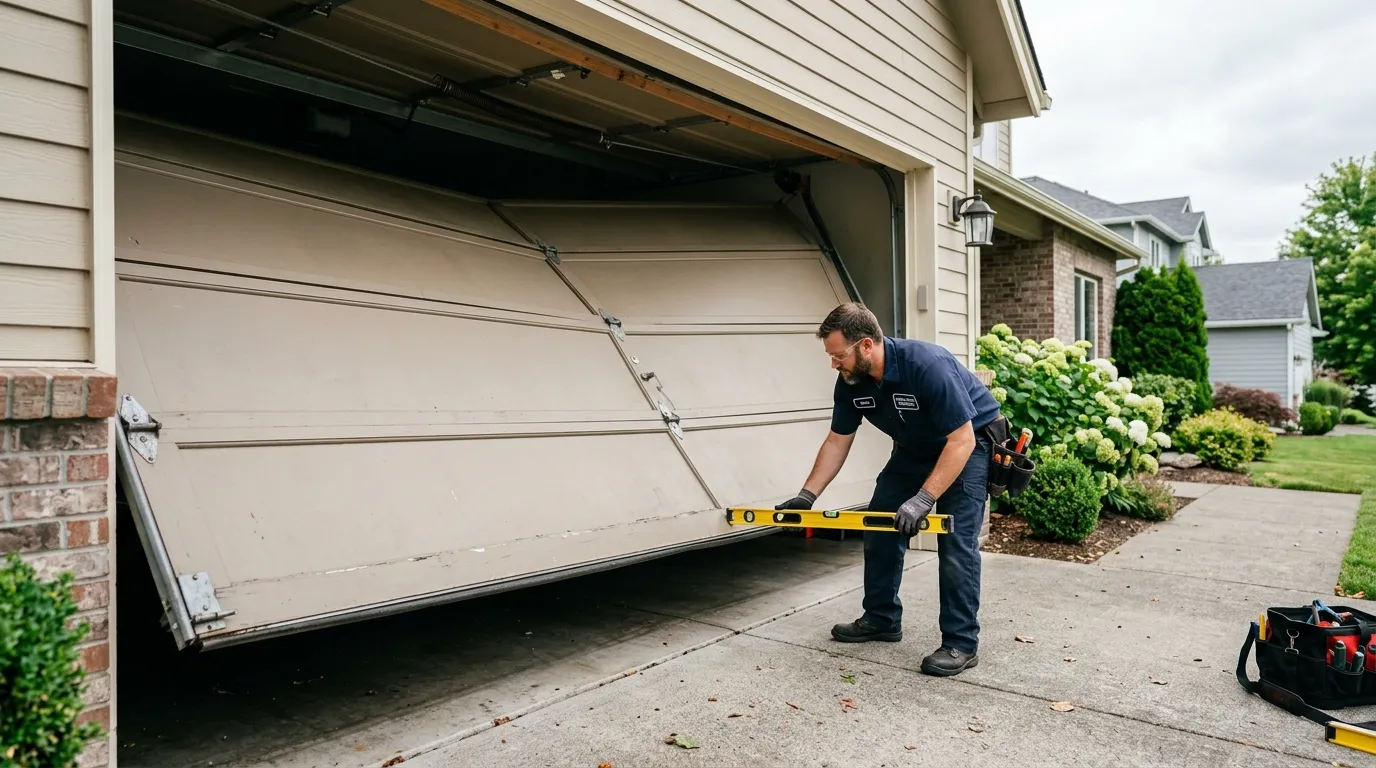
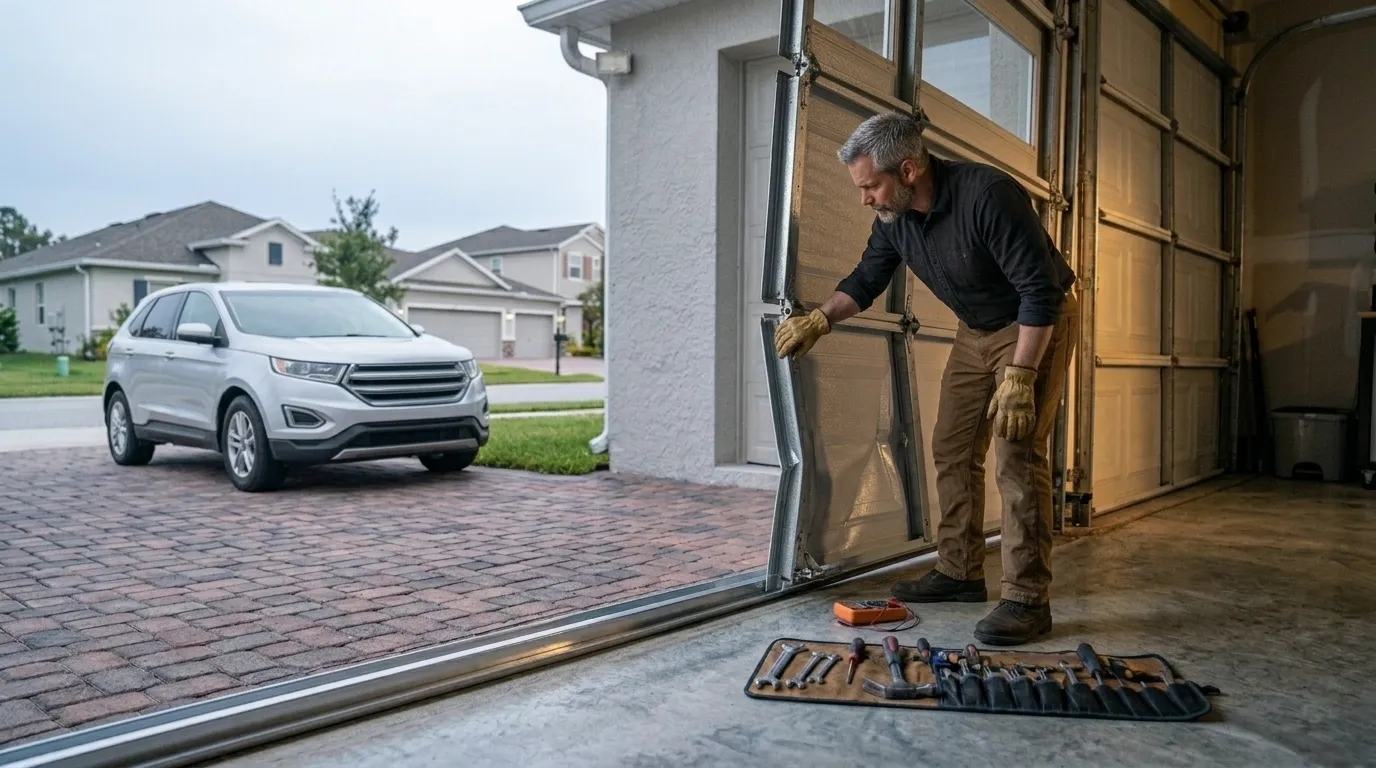
A close second is a cable that's frayed and slipped off the drum, which usually shows up as the door hanging crooked, dropping suddenly on one side while opening, or refusing to move at all. Openers on original 1960s and 70s wiring sometimes show a different pattern - grinding, stalling partway, or running the motor without moving the door, which usually points to a stripped gear or a failing capacitor rather than the door itself.
With 24,784 owner-occupied houses out of 53,399 households across the area, a large share of the doors in daily use are original equipment nobody has touched since the build year, which is why these failures tend to cluster in the same handful of ways rather than being random. At a median household income of $125,548, most owners here can afford a full replacement when the repair math doesn't pencil out, and we'll tell you when it doesn't.